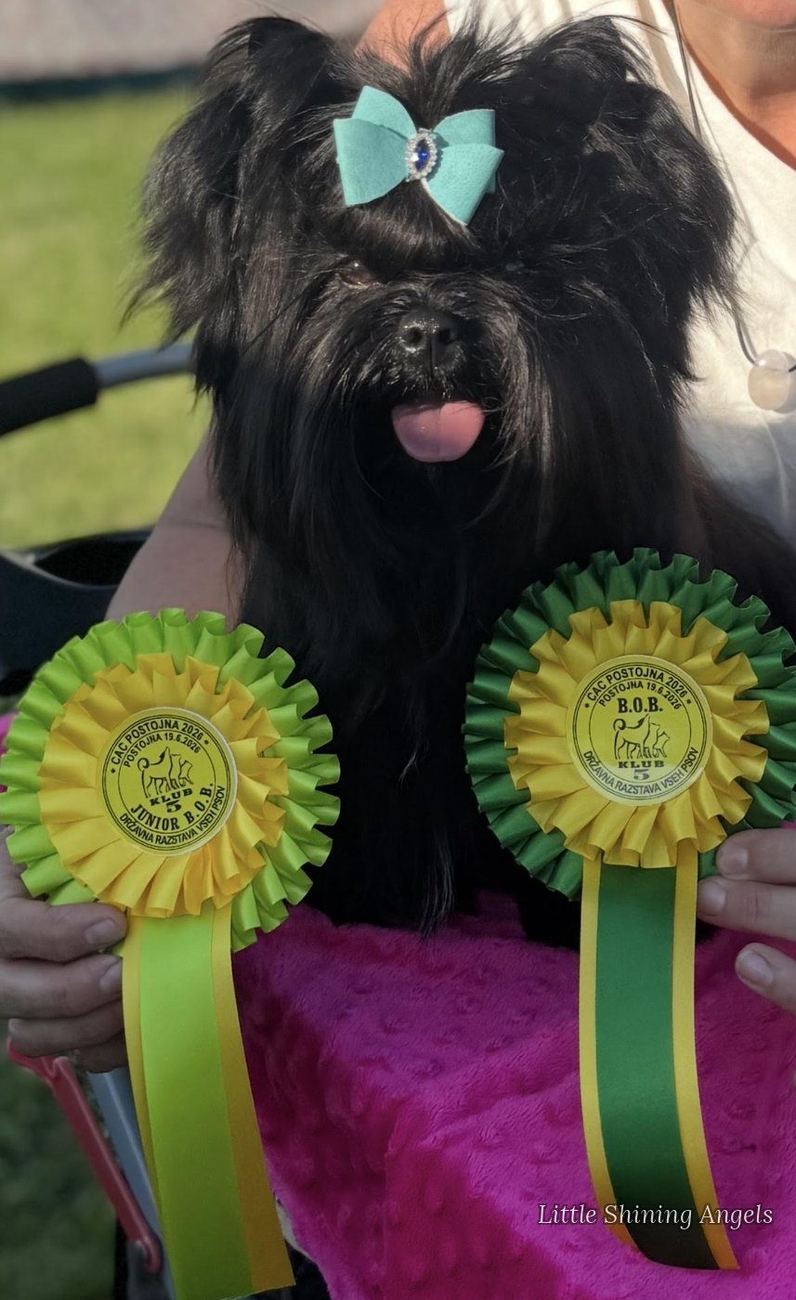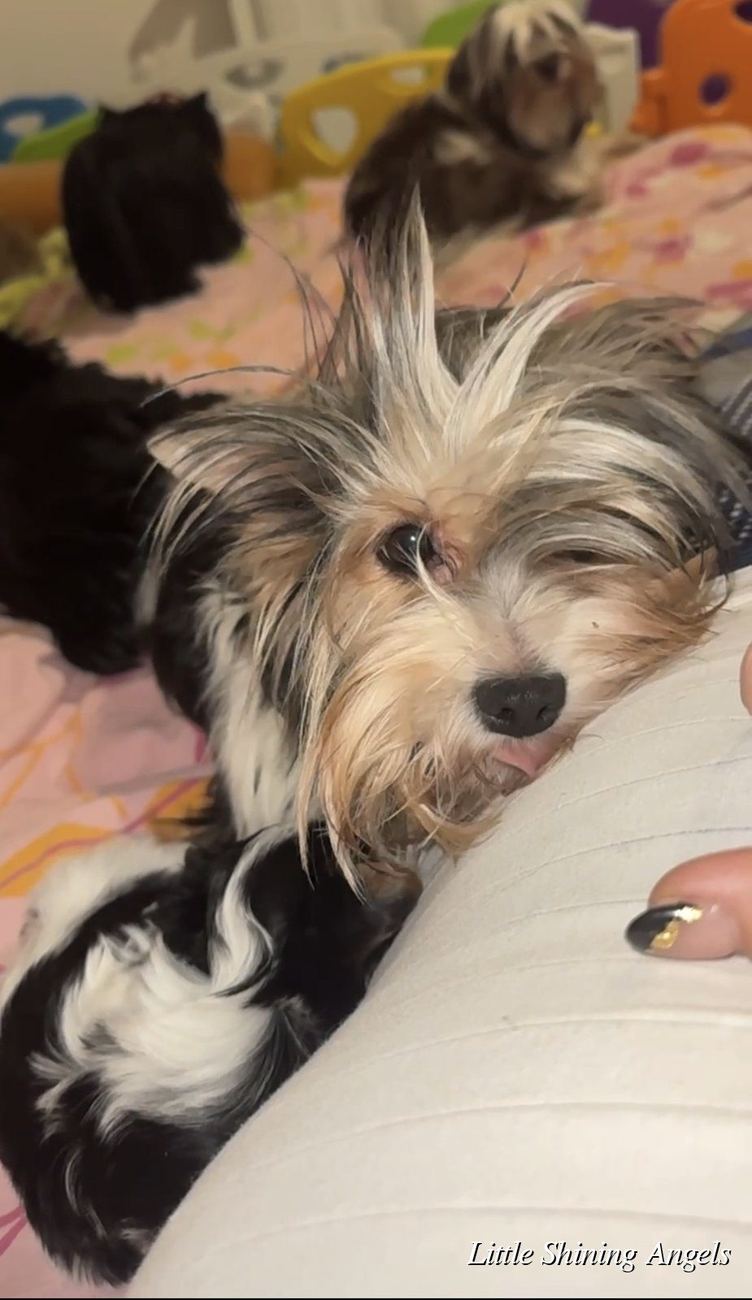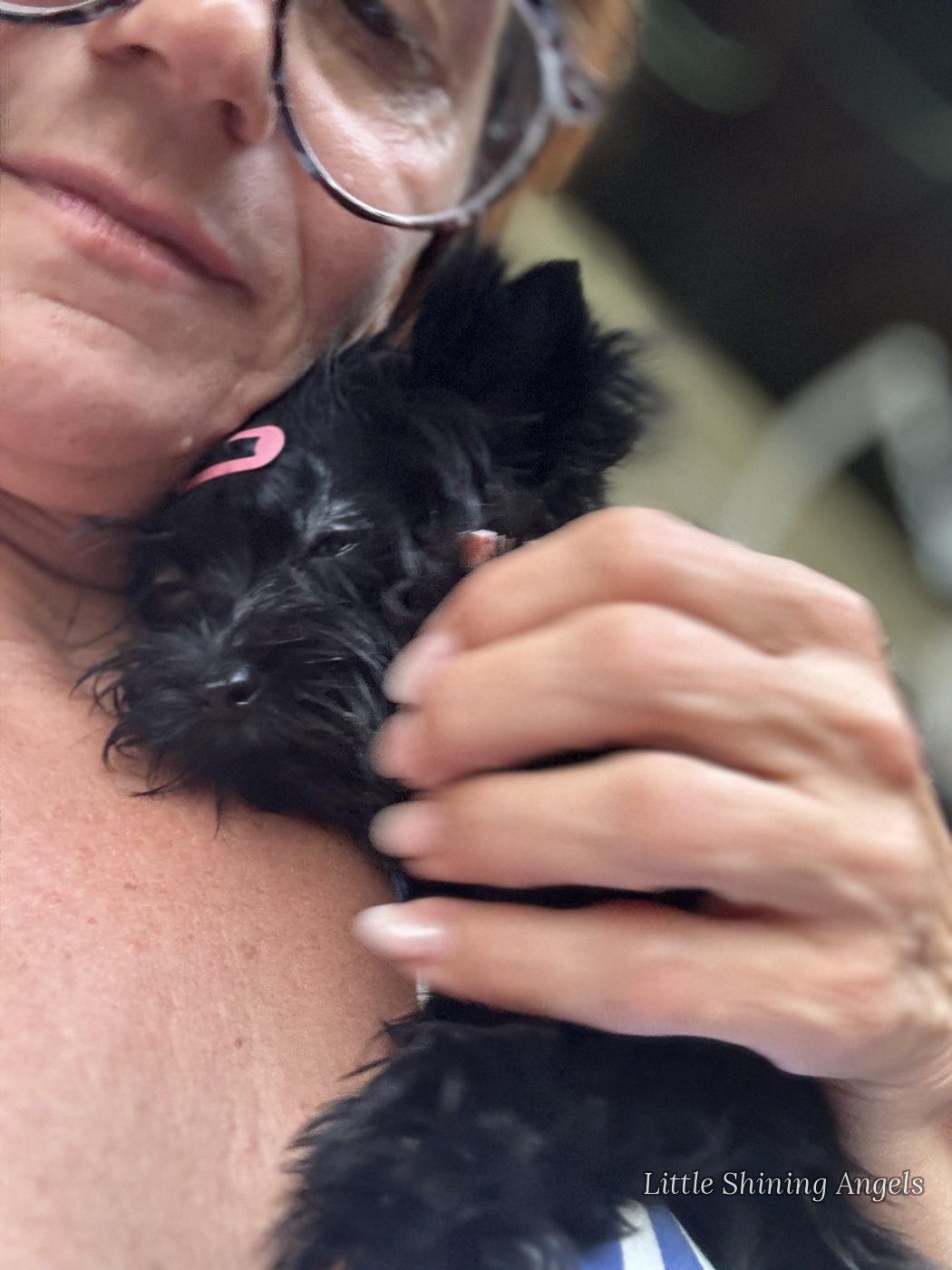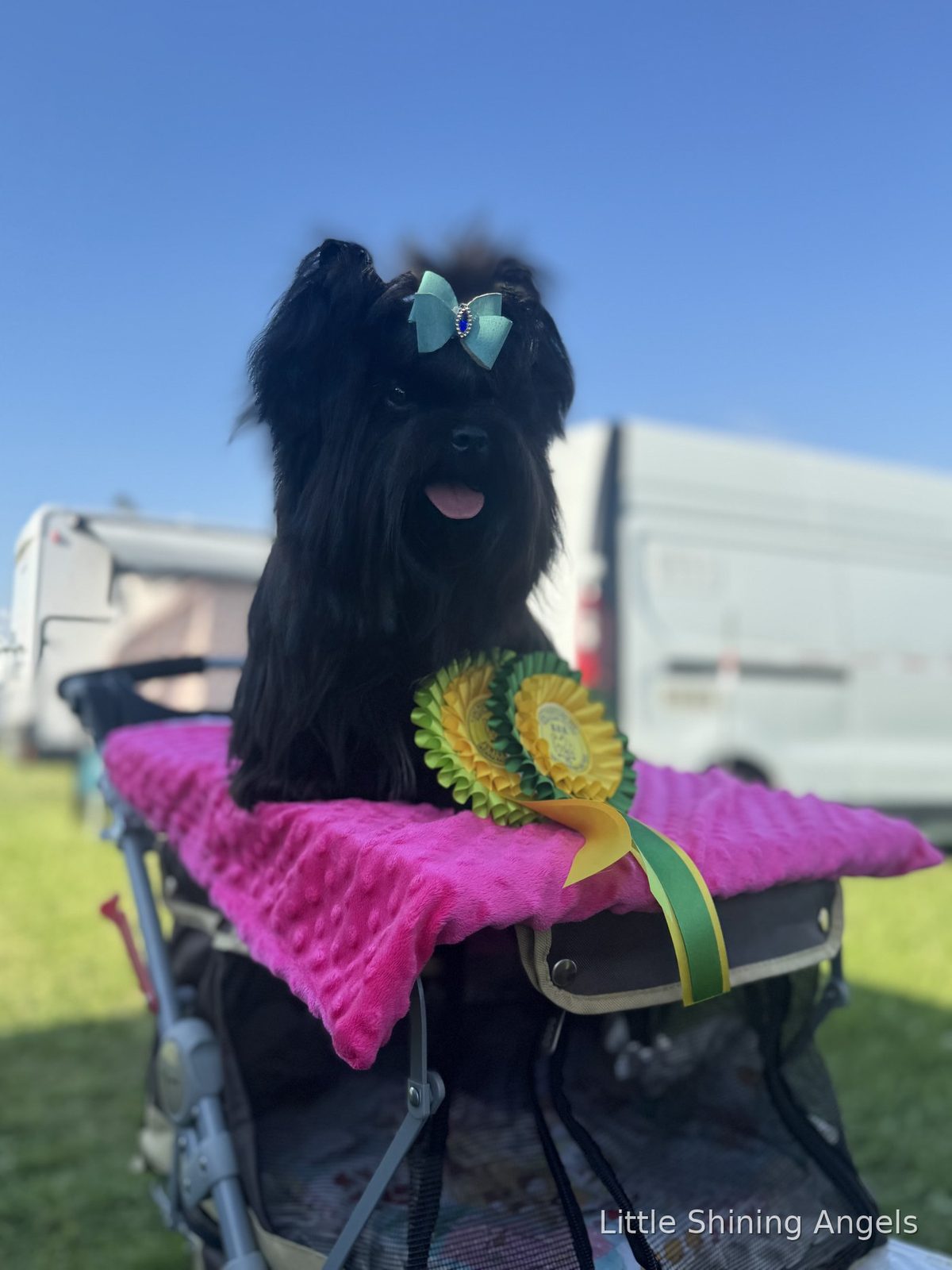
When you tell someone you show dogs, you often get a look that says more than words. There is some sympathy for the dog in it, and some judgement of the human. I understand where it comes from. I have decided to speak about it openly, without embellishment and without defensiveness, because the subject deserves an honest conversation.
Two honest admissions first
First: a dog show is not a stress-free environment. Anyone who claims otherwise is not being honest. The journey, unfamiliar smells, crowds, noise and a stranger's hands opening the dog's mouth are all stimuli for any dog. So the question is not whether a show causes arousal, but how much, for how long, and what we do about it.
Second, and this matters for credibility: there is no published scientific study measuring stress in dogs at conformation shows. Everything we can say is inferred from research in analogous settings — sporting competition, kennelling and novel environments. I say this openly, because admitting the limits of knowledge is more convincing than claims we cannot support.
What science does know
From research on agility and other competitions we know that cortisol, the stress hormone, rises with arousal. That is expected; it also rises with joy and play, because cortisol measures arousal, not necessarily suffering.
Something else is very important. As long ago as 1998, Beerda and colleagues showed that heart rate settles within about eight minutes after a stimulus ends, and salivary cortisol returns to baseline within about an hour. This matters because a claim circulates online that a dog needs twenty-four to seventy-two hours to recover from stress. That claim has no support in the scientific literature and contradicts what has been measured. What is true is different: if stimuli pile on top of one another without a break, tension accumulates. That is why we ensure calm at home after a show — not because hormones need days, but because the dog deserves rest and because this stops tension building.
The most powerful factor is you
For me this is the single most important finding of modern science, and also what I see in the ring every time. In 2019, Sundman and colleagues published a study in Scientific Reports on fifty-eight dog–owner pairs. They measured hair cortisol, a long-term indicator of stress, and found that the stress levels of dog and human were synchronised. Owners with high cortisol had dogs with high cortisol. Most tellingly, the synchronisation was stronger in dogs that competed, and it was predicted by the owner's personality, not the dog's.
Put simply: if you are tense, if you expect the impossible from your dog, if the judge's opinion worries you more than your dog's wellbeing, your dog will take that on. And the reverse is equally true. A calm hand on the lead is the best protection a dog can have at a show.
That is why I believe a show is in itself neither good nor bad. It depends on the human at the other end of the lead. The same event is a pleasant outing for one dog and distress for another. The difference lies not in the show but in the preparation and the relationship.
About the pen people misunderstand
I often hear the objection that dogs at shows are shut in cages. I understand how that looks from outside, but the meaning is often the opposite of the appearance.
A dog resting in a covered, quiet pen is not being punished. It is being sheltered from stimuli. For the dog this is a safe nest, a place where it does not have to monitor anything, where nobody strokes it, photographs it or talks to it. For toy breeds this is often the most pleasant part of the day.
But let us state the other side too, because silence would be dishonest. The same pen is distressing if the dog is not used to it, if it is too hot, if it stands in the middle of noise, and if the dog is left alone with no cover. The difference between safe haven and punishment is not the pen, but whether the dog was prepared for it and whether someone looked after it.
And here is the crux an outside observer cannot see: they do not see the preparation. They see a moment, not the months of work behind it. They see a pen, not the fact that the dog learned to rest in it at home. They see a tired dog, not that it is going home to sleep in half an hour. That is why many people see mostly their own assumptions in dog showing.
Where I agree with the critics
I will not defend everything that happens at shows, because that would be dishonest. I have seen things I do not condone. A dog left alone in the heat with no cover and no water. People dragging a dog into the ring when its whole body says it cannot cope. Handling where the result matters more than the living being.
It is also scientifically well established that methods based on discomfort and coercion harm dogs. In 2020, Vieira de Castro and colleagues showed that dogs trained with aversive methods displayed more stress-related behaviours, had higher cortisol after training, and made more pessimistic judgements even outside the training context. Anyone who forces a dog into the ring with a hard hand is harming it, and that is not a matter of opinion.
So I believe the right question is not "are shows good or bad", but "who is handling the dog, and how". The same applies to a walk, a car journey and a visit to the vet.
How we do it
At Little Shining Angels we show black Terriers, chocolate Terriers and Biewer Terriers. Our principle is simple: a dog goes to a show when it is ready for it, and only then. Never for a title, never because I am in a hurry.
I have described our preparation in detail in the article on preparing for a show. In short: we train with joy and reward, arrive early so the dogs can acclimatise, avoid crowds and noise, go straight home after the ring, and ensure several days of calm afterwards.
And most importantly: if a dog does not enjoy showing, I do not show it. No rosette is worth a dog that would suffer for it.
Literature and sources
Beerda B, Schilder MBH, van Hooff JARAM, de Vries HW, Mol JA (1998). Behavioural, saliva cortisol and heart rate responses to different types of stimuli in dogs. Applied Animal Behaviour Science 58(3–4):365–381.
Sundman A-S, Van Poucke E, Svensson Holm A-C et al. (2019). Long-term stress levels are synchronized in dogs and their owners. Scientific Reports 9:7391.
Buttner AP, Thompson B, Strasser R, Santo J (2015). Evidence for a synchronization of hormonal states between humans and dogs during competition. Physiology & Behavior 147:54–62.
Vieira de Castro AC, Fuchs D, Morello GM et al. (2020). Does training method matter? Evidence for the negative impact of aversive-based methods on companion dog welfare. PLOS ONE 15(12):e0225023.
Roberts C et al. (2019). What can we learn from the hair of the dog? PLOS ONE 14(5):e0216000.
Dog-show welfare guidance: The Kennel Club (UK), FCI and AKC.
Note on the limits of evidence: at the time of writing, no peer-reviewed study has measured stress in dogs directly at conformation shows; the above is inferred from analogous settings.
This text is based on current professional knowledge and on our kennel's experience. It does not replace consultation with a veterinarian or cynologist.