Note: this text is informational and does not replace veterinary care. At any sign of illness, consult your vet immediately.
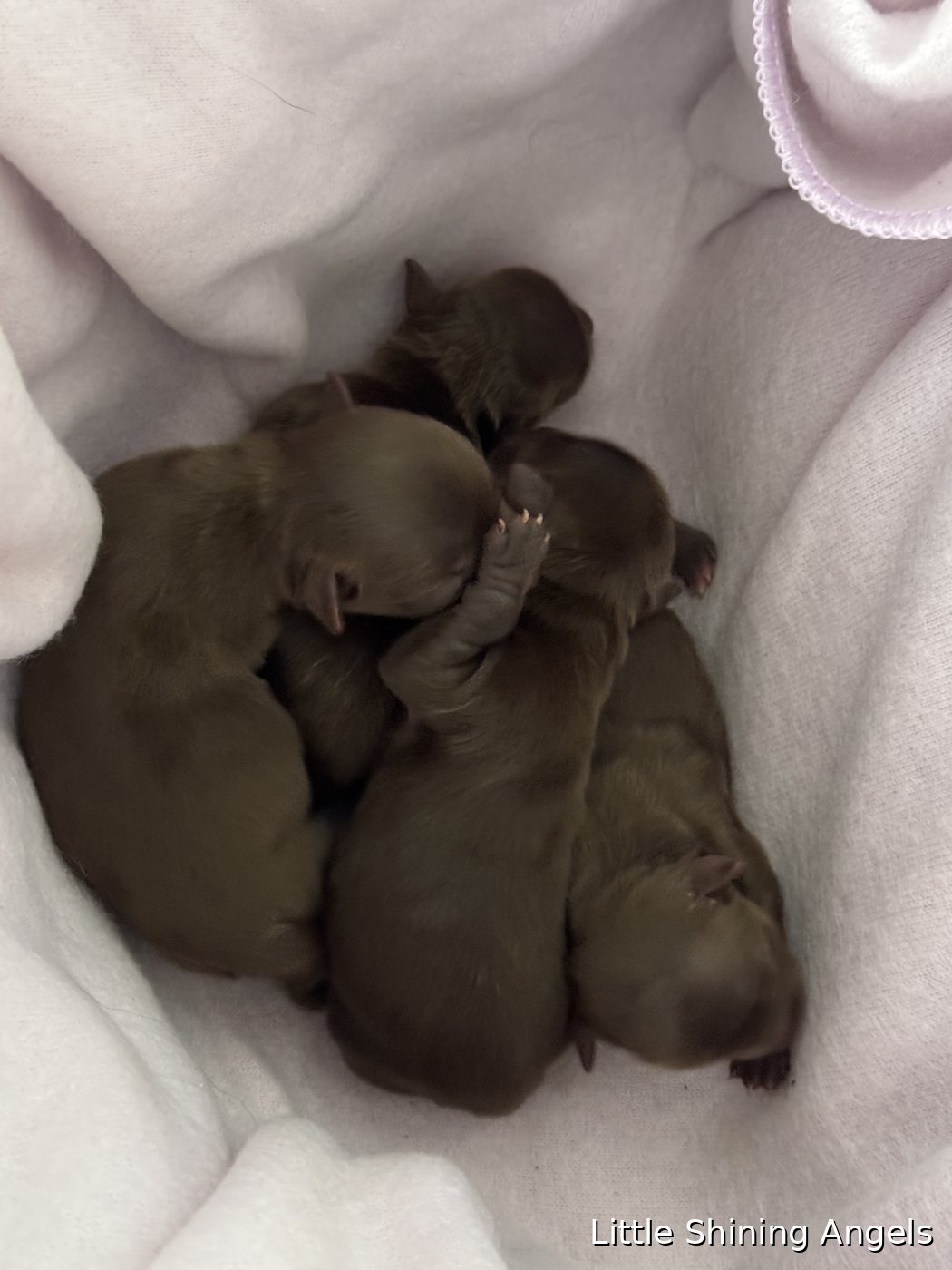
The neonatal period is the most fragile time in a dog's life. Newborn puppies — including those of the chocolate terrier (chocolate yorkie) — still have an undeveloped immune system and poor temperature control, so they are extremely vulnerable. Poor hygiene and inadequate care of the nursing mother are not only a risk to her, but a direct source of serious, even life-threatening infections for the whole litter. That is exactly why cleanliness matters so much in this period.
Gastrointestinal infections and neonatal diarrhoea
If the mother's belly and teats carry dirt, post-partum discharge and impurities, puppies ingest high concentrations of bacteria while nursing. In Small Animal Pediatrics (Peterson and Kutzler) it is stressed that newborns are especially susceptible to intestinal bacterial infections. These lead to severe diarrhoea, and since puppies cannot replace fluid losses, dangerous dehydration follows quickly.
Respiratory infections and the risk of pneumonia
A neglected mother and a damp, unclean nest promote the growth of bacteria in the air the puppies breathe. As the BSAVA Manual of Canine and Feline Reproduction and Neonatology (England and von Heimendahl) notes, poor hygiene and a contaminated environment can accelerate respiratory distress; puppies with a weak suckling reflex easily develop pneumonia.
Skin infections and impetigo
A newborn's skin is still developing and lacks a full protective barrier. Dirt and moisture from the mother transfer to the puppies' skin on contact. In Muller and Kirk's Small Animal Dermatology (Miller, Griffin and Campbell) it is described how a lack of hygiene and moisture on the skin quickly provoke superficial pustular skin infections (impetigo), causing itching and discomfort.
Navel infection (omphalitis)
In the first days the navel is an open path into the abdominal cavity. If the mother moves in an unclean environment or has unkempt hair on her underside, bacteria easily reach the fresh umbilical stump. Navel inflammation shows as swelling, redness and discharge, and the infection can spread deeper quickly — so it requires immediate veterinary care.
Why cleanliness always pays off
One thread connects all these risks: the cleanliness of the mother and the nest. Regular gentle hygiene, a dry and tidy environment and close observation of the puppies are the simplest and most effective steps to give a litter a safe start. And at any sign — diarrhoea, weakness, rapid breathing, a red navel — we should not delay in calling the vet.
Literature
Peterson MR, Kutzler MA (eds). Small Animal Pediatrics: The First 12 Months of Life. Saunders/Elsevier, 2011.
England GCW, von Heimendahl A (eds). BSAVA Manual of Canine and Feline Reproduction and Neonatology. 2nd ed., BSAVA, 2010.
Miller WH, Griffin CE, Campbell KL. Muller and Kirk's Small Animal Dermatology. Elsevier.
Note: this text is informational and does not replace veterinary care.