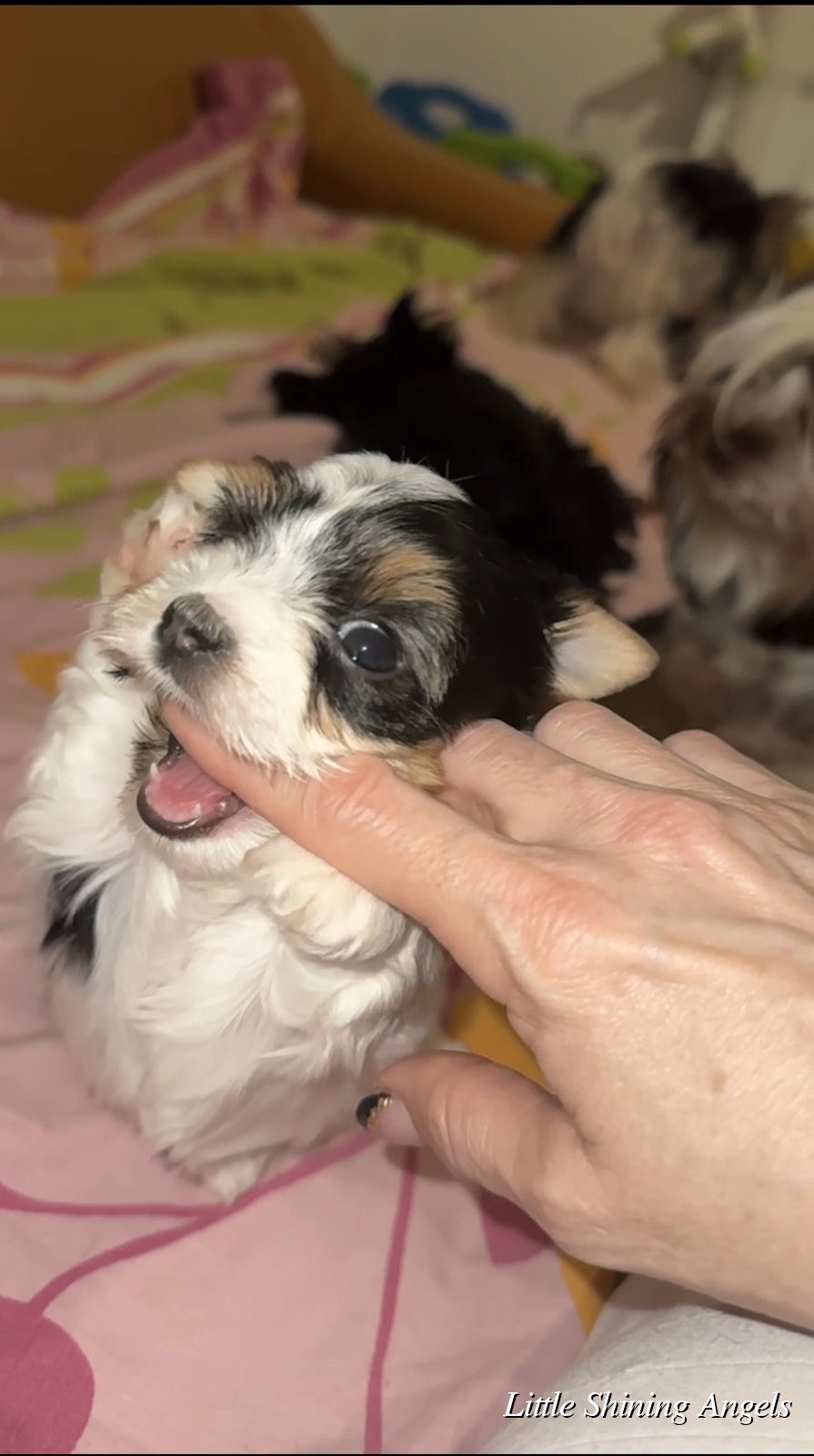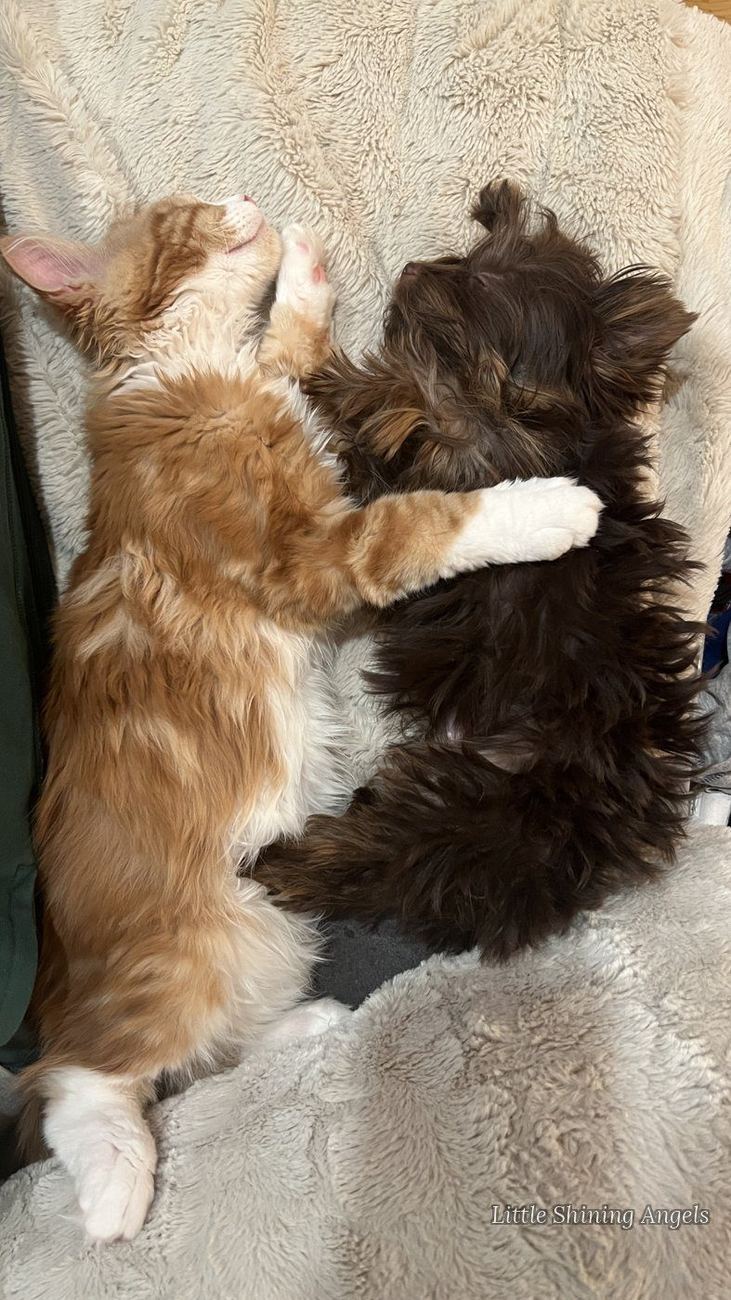
One of the most common things new puppy owners underestimate is rest. For small breeds like Terriers and Biewer Terriers, this is especially true. A puppy needs a huge amount of sleep, far more than we think, and this rest is the foundation of healthy development.
Eighteen to twenty hours a day
Yes, you read that right. A puppy sleeps up to twenty hours a day. During sleep it not only rests but also organises and stores in its brain everything it experienced during the day. Sleep is as important to it as food. Without it, it cannot develop healthily.
An overtired puppy is a naughty puppy
Many a problem we attribute to poor upbringing is in truth only tiredness. When a puppy is overtired, it becomes irritable, bites more, does not listen and is restless, much like a small child who badly needs a nap. If a dog goes wild in the evening, it often needs not more play but rest.
A calm corner where no one disturbs it
So it is important that a puppy has its own calm, warm corner where no one disturbs it while it rests. Children should be told not to tease or wake a dog while it sleeps. A crate or soft bed in a quiet place is a safe haven for a puppy, somewhere it can retreat to.
Why rest pays off
When a puppy gets enough rest, the stress each new day brings does not build up. A rested puppy is calmer, learns more easily and is healthier. But a tired puppy with no peace becomes tense, sensitive and more prone to problems, both behavioural and health-related.
So in raising a puppy, let us not forget this simple truth. Rest is not a waste of time; it is part of upbringing. A well-rested puppy is happier and easier to raise.
References and sources
Adams GJ, Johnson KG (1993). Sleep-wake cycles and other night-time behaviours of the domestic dog. Applied Animal Behaviour Science 36(2–3):233–248.
Kis A, Szakadát S, Kovács E et al. (2017). Development of a non-invasive polysomnography technique for dogs. Physiology & Behavior 172:110–116.