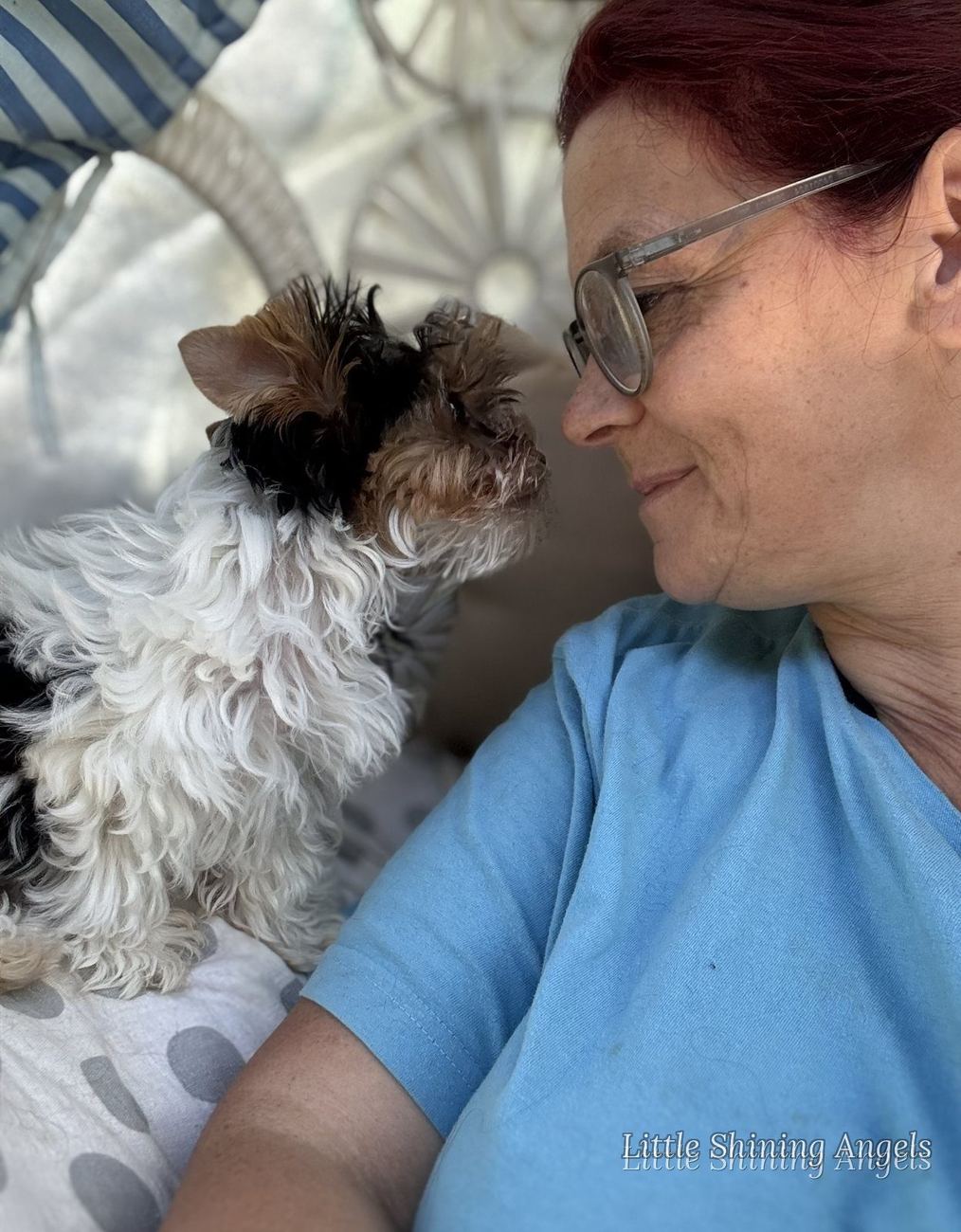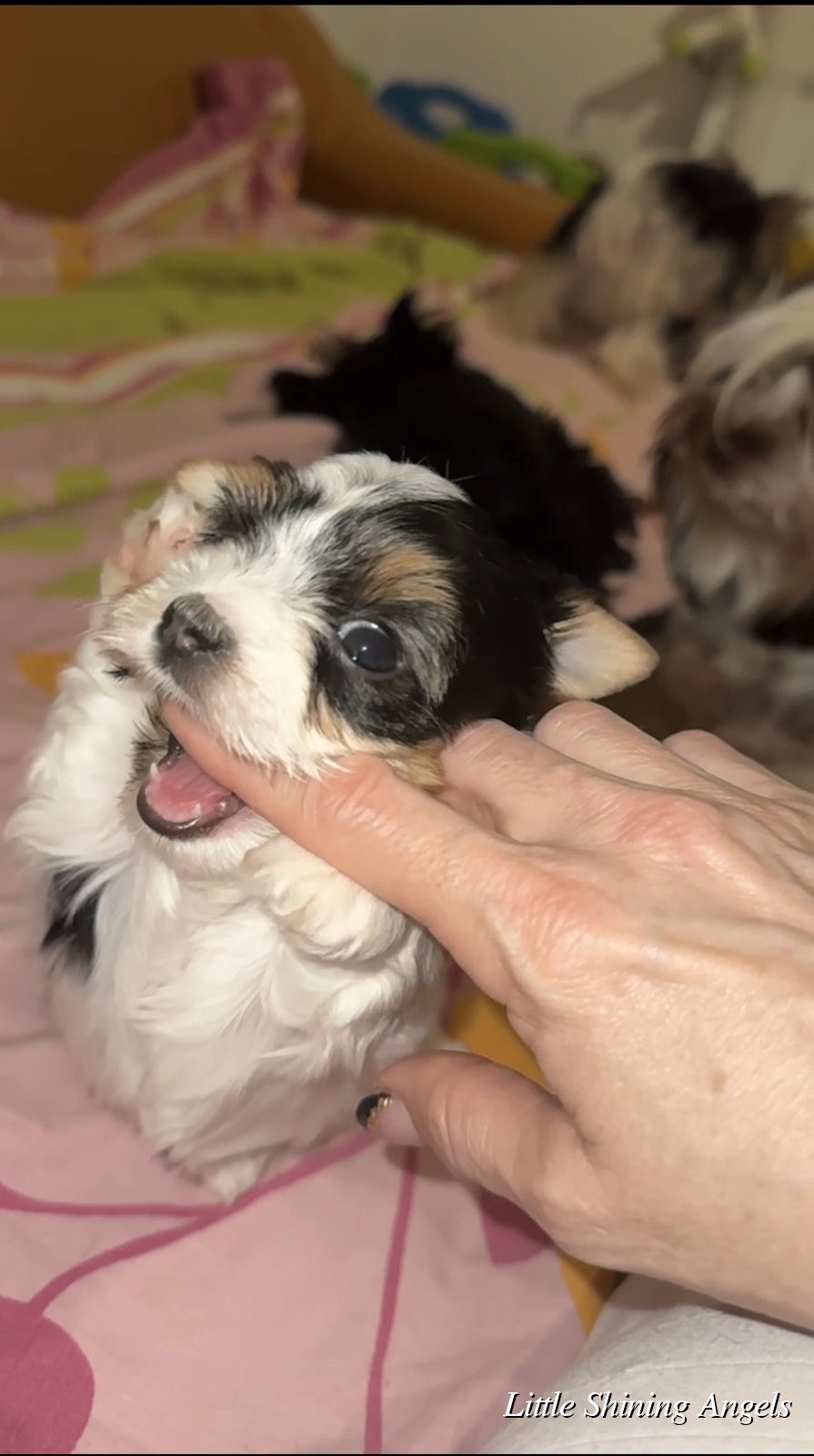
The question of when a puppy should leave the litter is one of the most important in all of breeding. And at the same time one of the most misunderstood. Some believe the sooner it goes, the better it bonds. Others say the longer it stays with its mother, the better. But the truth is not in the date. The truth is in what the puppy has learned by the time it leaves.
What a puppy learns only in the litter
Between the third and eighth week, something happens in the litter that cannot be made up for later. From its mother, brothers and sisters, the puppy learns how to be a dog.
It learns to control the force of its bite, what experts call bite inhibition. When it bites too hard during play, a sibling yelps and the play stops. So it learns where the limit is. That is precisely why dogs that left the litter too early often later bite too roughly, not out of malice but because they had no one to learn it from.
It also learns dog language, that is, how to communicate with fellow dogs, when to withdraw, when to invite play. And it learns its first social limits.
Likewise irreplaceable is the presence of a calm, balanced mother. Her calm is part of the puppy's upbringing.
The other side of the story: the socialisation window
But there is another side that must also be understood.
Between about the fourth and twelfth to sixteenth week, a puppy's mind is most open to the world. This is when it most easily learns that people are kind, that noise is not dangerous and that new things are not a threat. We call this the socialisation window, and this time then slowly closes.
That is precisely why many cynological guidelines recommend placement between the eighth and twelfth week, so the new owner keeps as much of this precious time as possible.
Why the question is wrongly framed
And here is the essence. The question is not whether a puppy should leave earlier or later. The question is whether it receives socialisation during this time.
If a puppy stays in the litter longer but spends this time only among brothers and sisters, without contact with the world, then the extra time really is a loss. It misses what it should have encountered.
But if it stays longer and the breeder works intensively with it during this time, introducing it to the world every day and bringing it new experiences, then it misses nothing. On the contrary. It gets both. A complete school in the litter and an open world.
How we handle this
We do not place our puppies before three months of age. We have a reason for this, and it is not accidental.
We want the puppy to learn fully in the litter everything a human cannot teach it. Bite control, dog language, social limits. It is precisely this knowledge that separates dogs that can communicate with other dogs from those that never mastered it.
At the same time, this period is not empty. Every day we introduce our puppies to the world. They hear household sounds, the vacuum cleaner, the doorbell, footsteps, dishes. They get to know different surfaces under their paws. Every day we take them in our hands, touch their paws and ears. They meet friendly people. All of this happens gradually, calmly and always at the puppy's rhythm.
So a puppy leaves us with both. A good dog school and an open, curious attitude to the world.
What we advise new owners
When a puppy comes to you, the work is not finished. It is only beginning.
The first weeks with you are still precious. So do not waste them with excessive protection. Take the puppy into the world, but slowly, calmly and always at its rhythm. Let every new experience be linked with something pleasant.
And if you are ever in doubt, call us. We remain available for our puppies even after they leave us.
Literature and sources
Slabbert JM, Rasa OAE (1993). The effect of early separation from the mother on pups in bonding to humans and pup health. Journal of the South African Veterinary Association 64(1):4–8.
Pierantoni L, Albertini M, Pirrone F (2011). Prevalence of owner-reported behaviours in dogs separated from the litter at two different ages. Veterinary Record 169(18):468.
American Veterinary Society of Animal Behavior (2008). Position Statement on Puppy Socialization.