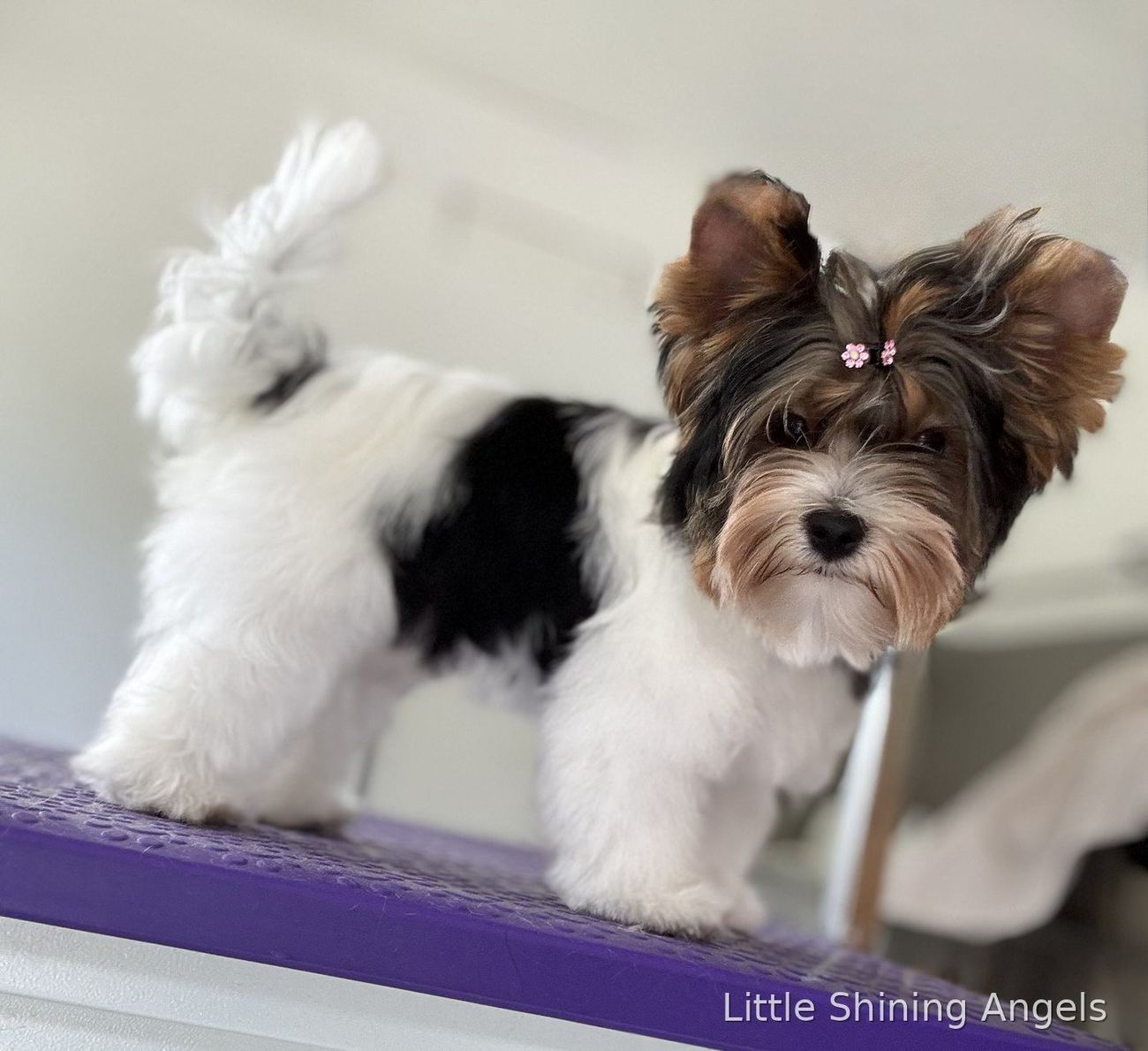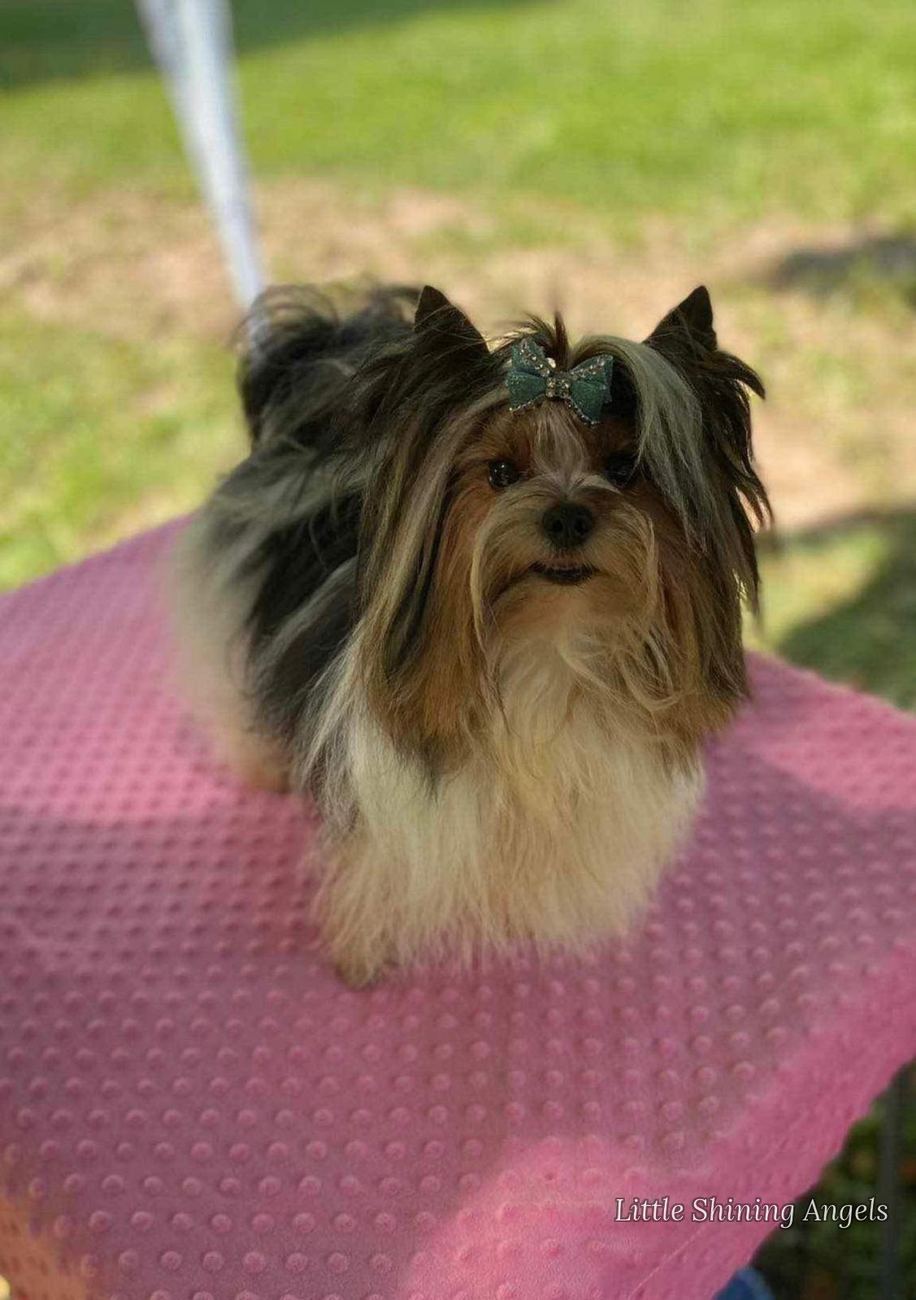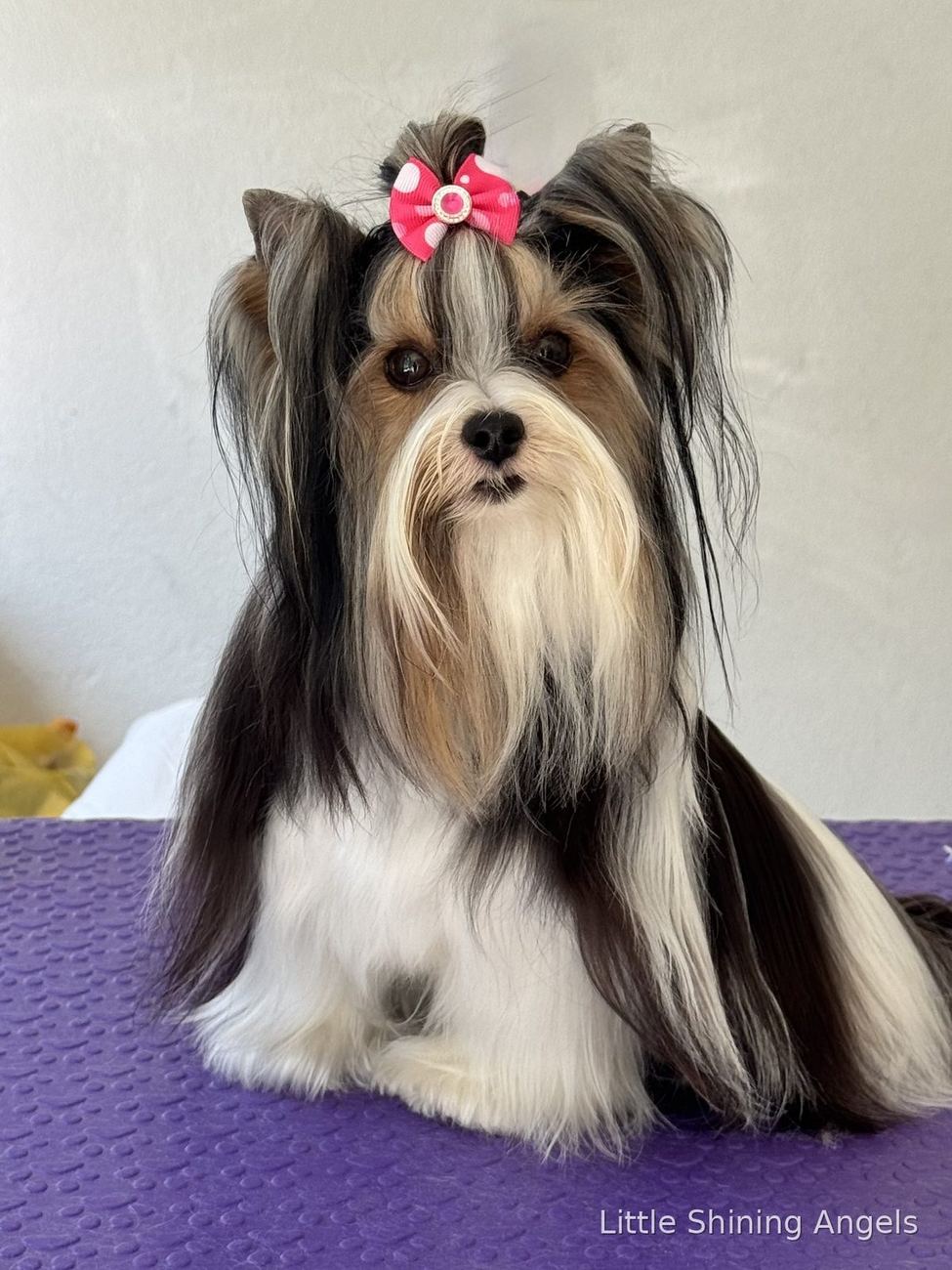
The Biewer Terrier has two valid standards, and they are not identical. Which one applies where, how they differ, and what that means for an exhibitor in Slovenia is a question with no easy answer online. This article attempts to give one.
Note: breed standards are the copyrighted work of the relevant organisations. They are not reproduced here; key points are summarised with my own explanation. Links to the originals appear in the sources.
Which standard applies where
For us, the German standard applies. The reason is simple: the Biewer Terrier originates in Germany, and the Fédération Cynologique Internationale has not yet recognised the breed.
The German kennel association VDH recognised the Biewer Terrier as a national breed in May 2024. Guardianship was transferred to the German Toy Dog Breeders' Association, the breed carries standard number 990 and is placed in FCI Group 3, with the explicit note that it is not FCI-recognised. It may be shown at national and international exhibitions from 1 May 2024.
In the United States the standard drawn up by the American breed club and adopted by the American Kennel Club applies. Its most recent amendment was approved in February 2026 and takes effect on 30 April 2026.
For a Slovenian exhibitor this means: the dog is judged by the German standard, while the American one is useful for understanding because it is more detailed.
Size
Here the difference is most tangible.
The German standard states that height at the withers equals height at the croup and measures 21 to 26 centimetres.
The American standard gives 8 to 10 inches, roughly 20 to 25 centimetres, and lists height over 11 inches — about 28 centimetres — as a serious fault.
The ranges are close, but the German one allows slightly taller dogs. A dog of 26 centimetres is comfortably within the German limit while already above the American ideal.
Head colour
Both standards agree that the head is what defines the Biewer.
The German standard requires head colour in shades of blue or black, gold or tan, and white, as symmetrical as possible. Any combination of those colours in balanced symmetry is permitted.
The American standard is more explicit: the Biewer is defined by the placement of tan on the head. The ideal is black or blue, tan and white in good symmetry. A head lacking tan is a disqualification. The chin and throat must be white.
This is an important difference. The American standard disqualifies a dog with no tan on the head; the German does not phrase it so sharply.
Body colour
Here the two standards are very close.
The German states that the hair on the back is blue or black and white. There is no tan hair on the back, belly, chest, legs or feet; a few tan hairs around the anus are permitted. Chest, belly, legs and tail tip are white. The white of the chest extends up the neck to the chin, and the legs must be white from elbows and stifles to the toes.
The American standard gives the same distribution and adds that a solid-coloured dog is undesirable and that any colour outside the described tricolour pattern is a disqualification.
If you want one practical test: white must be on the legs from the elbows down and on the tip of the tail. That is easiest to check and is identical in both standards.
Pigment and eyes
Here the American standard is considerably more detailed and stricter.
It requires the eye rims, nose and lips to be completely black. Incomplete pigment in these places is a serious fault. Liver pigmentation of the eye rims or nose is a disqualification.
The eyes must be medium sized, dark and expressive, with the iris as dark as possible and showing no flecks of blue. Blue eyes or blue flecks in the iris mean disqualification.
This matters greatly for a breeder, because it means eye colour and pigment quality in the Biewer are not a detail but a criterion.
Ears, tail and topline
Both standards require erect ears. The American adds that they are small, V-shaped, set high and covered with hair except for the shaved tips. Ears that do not stand erect are a serious fault.
In both, the tail is set high, richly coated and carried in an arch over the back.
The topline must be level, with height at the withers equal to height at the croup. The American standard lists being high in front or rear, and a roached or rounded back, as serious faults.
Coat and grooming
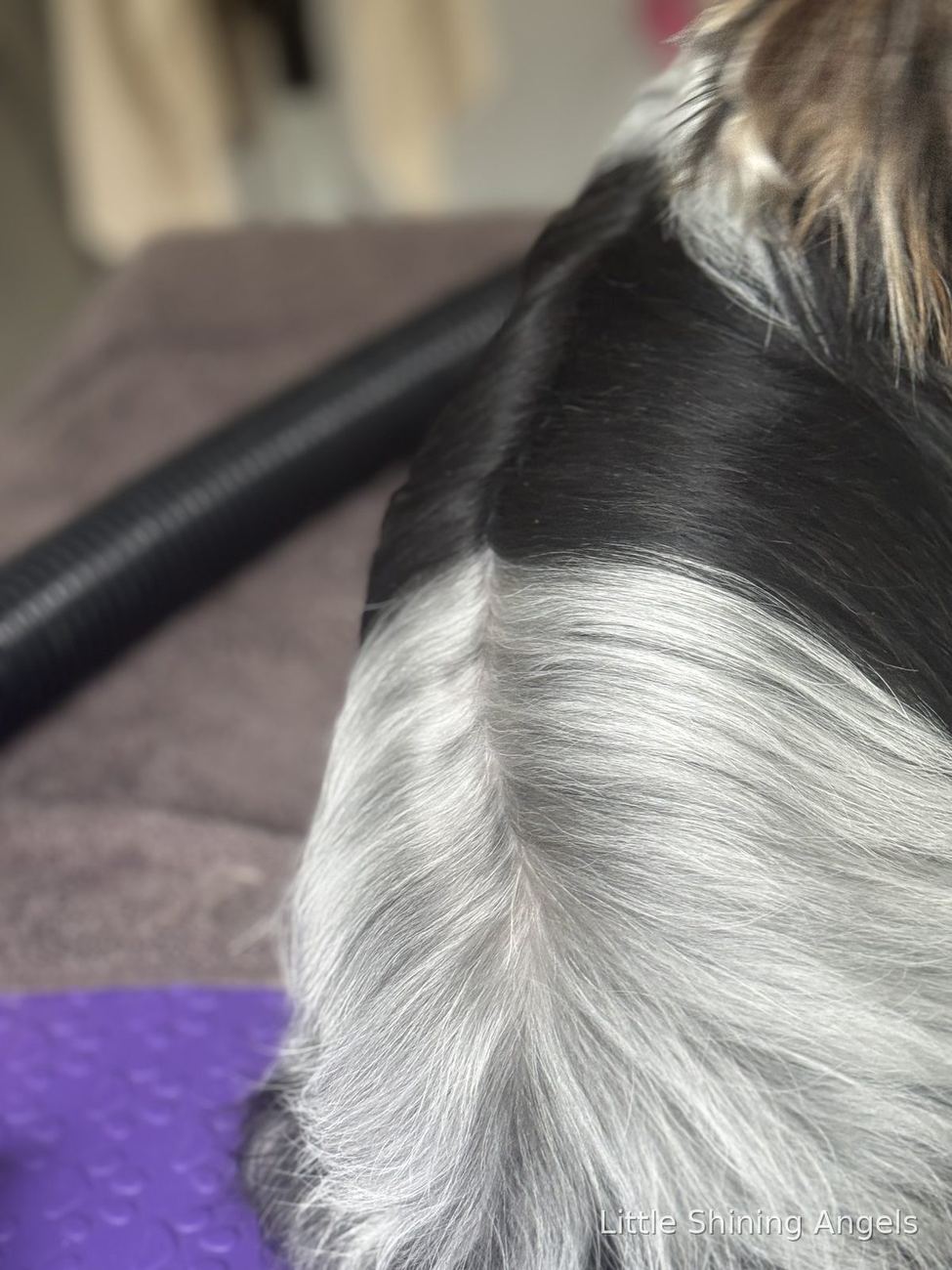
In both, the coat is long, straight, silky and without undercoat, parted down the middle of the back and falling evenly to the ground on both sides.
The American standard contains a provision crucial for exhibitors: the head fall must be tied in a single fall, finished simply and with a single bow. Excessive head grooming of the kind common in some other breeds is penalised so severely as to eliminate the dog from competition.
This is worth knowing, because many people work hard on an elaborate topknot and thereby harm rather than help their dog.
Temperament
The German standard describes the Biewer as intelligent, loyal and deeply devoted to its owners, with a cheerful, whimsical and childlike nature, and — despite occasional stubbornness — an obedient and faithful companion.
The American standard says much the same: intelligent and loyal, affectionate and playful, an excellent companion and family dog.
In this breed, then, temperament is not a footnote but part of the description.
What a pedigree looks like
Because the question of how the breed is actually registered here comes up so often, the simplest answer is to show the document itself. Below is the ancestry chart of one of our dogs, issued by the Slovenian Kennel Club.
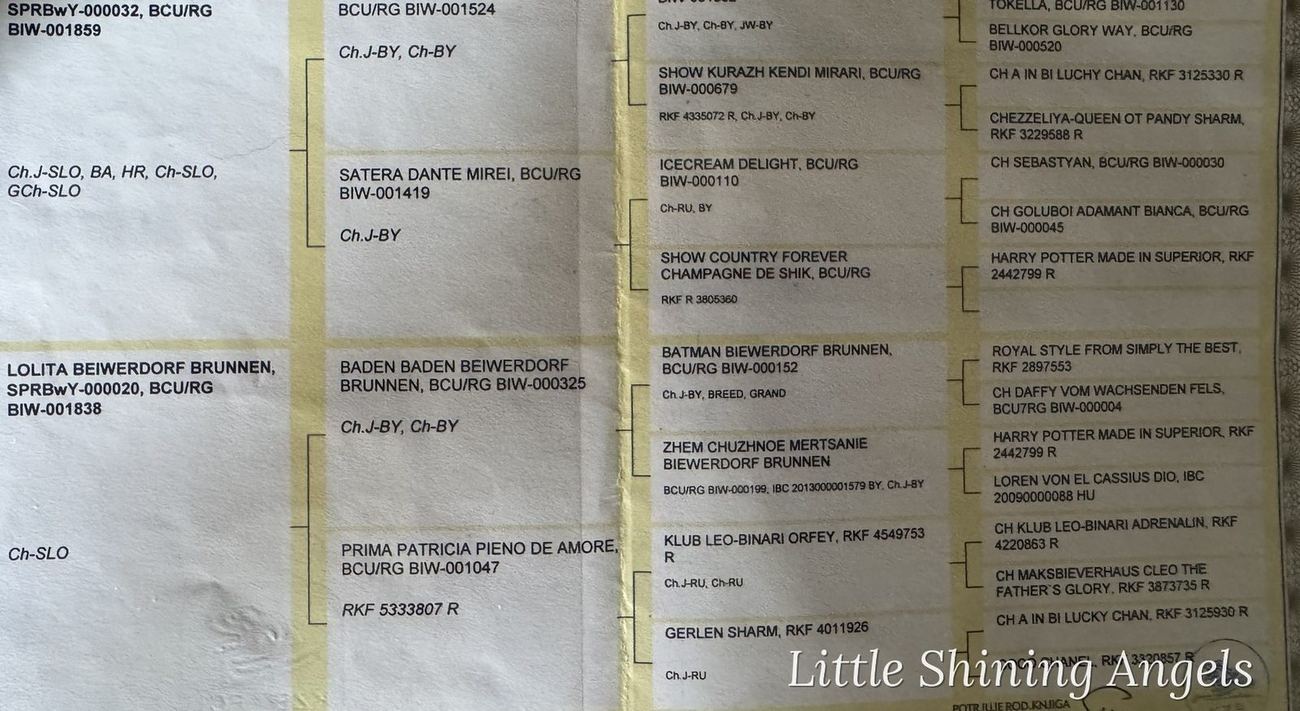
Personal details have been removed. Only the ancestry chart is shown.
Registration goes into a special register, a consequence of the breed not yet being recognised by the FCI. The chart shows clearly how international Biewer breeding is: the ancestors come from several countries, which in a young breed is essential for a healthy and varied gene pool.
What this means for exhibitors here
Dogs here are judged by the German standard, since the FCI has not recognised the breed and the VDH has assigned guardianship to the German association.
In practice this means three things. First, a height up to 26 centimetres is acceptable. Second, colour symmetry is desirable, but the German standard permits more combinations than the American. Third, judges in the region often apply criteria closer to the American standard, especially regarding pigment and symmetry on the back, because that standard is more detailed.
So when preparing a dog I recommend meeting the stricter of the two criteria. A dog that satisfies the American standard will almost certainly satisfy the German one. The reverse is not always true.
A final thought
A standard is not a list of faults but a description of the dog we wish to preserve. In the Biewer, that description grew out of something the founding breed declared to be a fault. I think that is worth remembering whenever anyone becomes excessively strict.
Literature and sources
Verband für das Deutsche Hundewesen (VDH). Breed lexicon: Biewer Terrier, standard no. 990. welpen.vdh.de (accessed 19 July 2026).
Verband Deutscher Kleinhundezüchter e.V. Der Biewer — nationale Rasse. FCI Group 3, standard no. 990, breed not FCI-recognised; description of colour and size. kleinhunde.de/biewer.php (accessed 19 July 2026).
VDH recognition notice: Biewer Terrier recognised as a national breed, guardianship transferred to the German Toy Dog Breeders' Association, showing permitted from 1 May 2024. vdh.de (accessed 19 July 2026).
Biewer Terrier Club of America. Official Standard of the Biewer Terrier. Amended 2 February 2019, approved 5 February 2026, effective 30 April 2026. biewerterrierclubofamerica.org/biewer-terrier-standard/ (accessed 19 July 2026).
American Kennel Club. Biewer Terrier — Breed Standard. akc.org (accessed 19 July 2026).
Melody Rain Kennel. The first Biewer breed standard (original title in English). en.biewerkennel.tilda.ws (accessed 19 July 2026). A commercial breeding source; its account of the original standard is not independently confirmed.
UCI (United Kennel Clubs International). Breed Standard Biewer. uci-ev.de (accessed 19 July 2026). Note: UCI is an independent international organisation, separate from the FCI and VDH; its standard is neither the German nor the American official standard.
Note: standards change. Always check the current text with the competent organisation before a show.
This text is based on current professional knowledge and on our kennel's experience. It does not replace consultation with a veterinarian or cynologist.