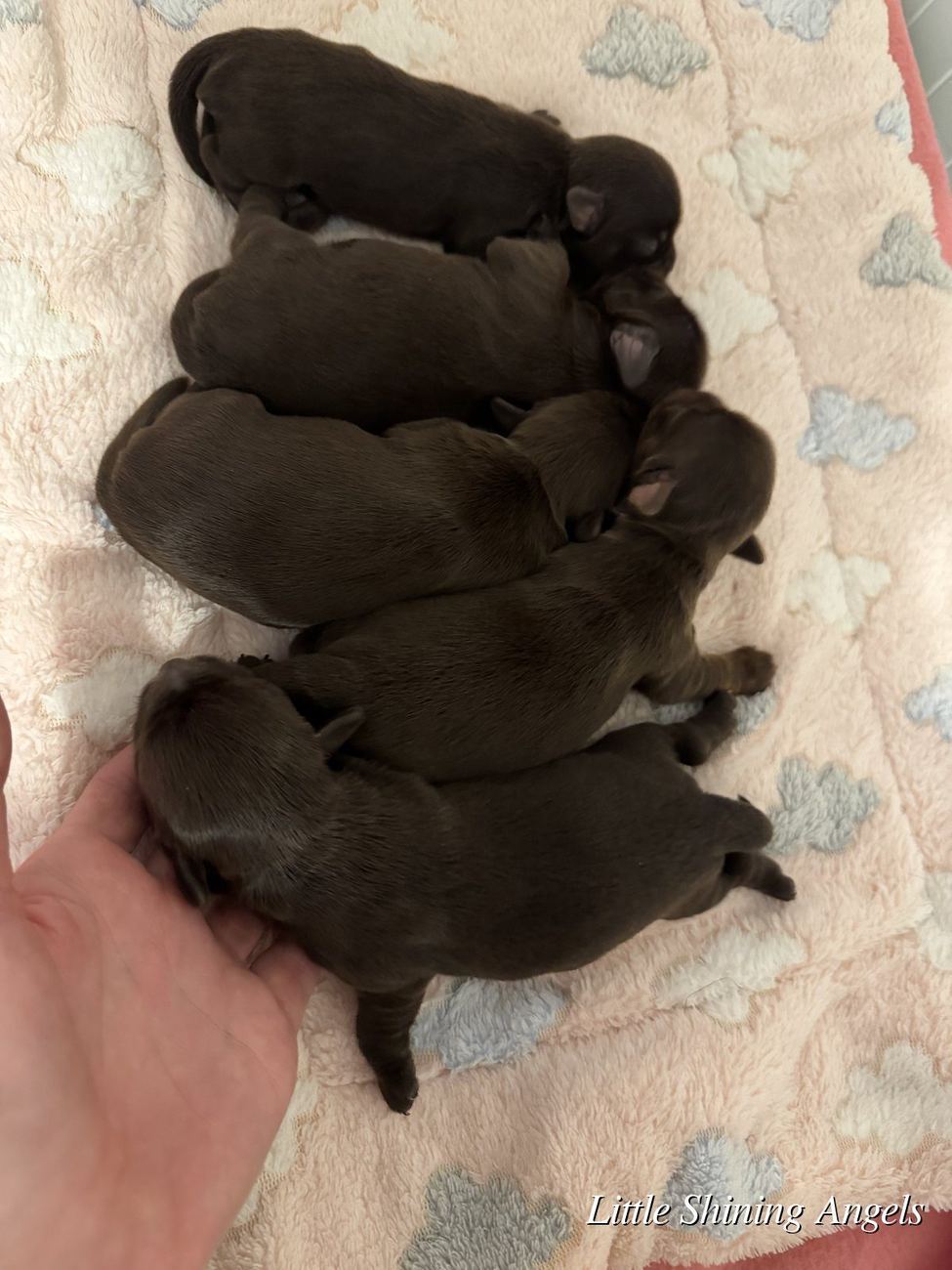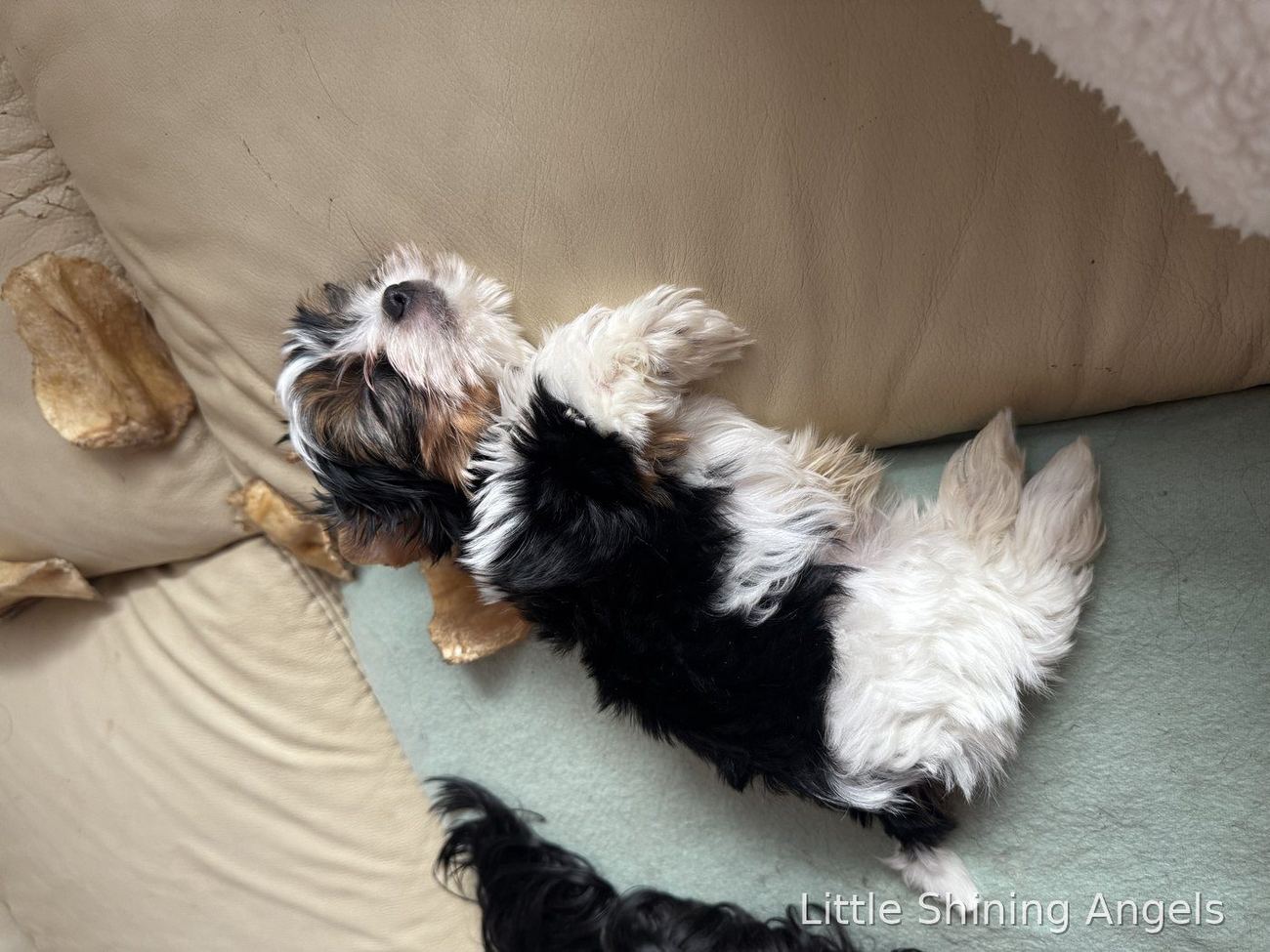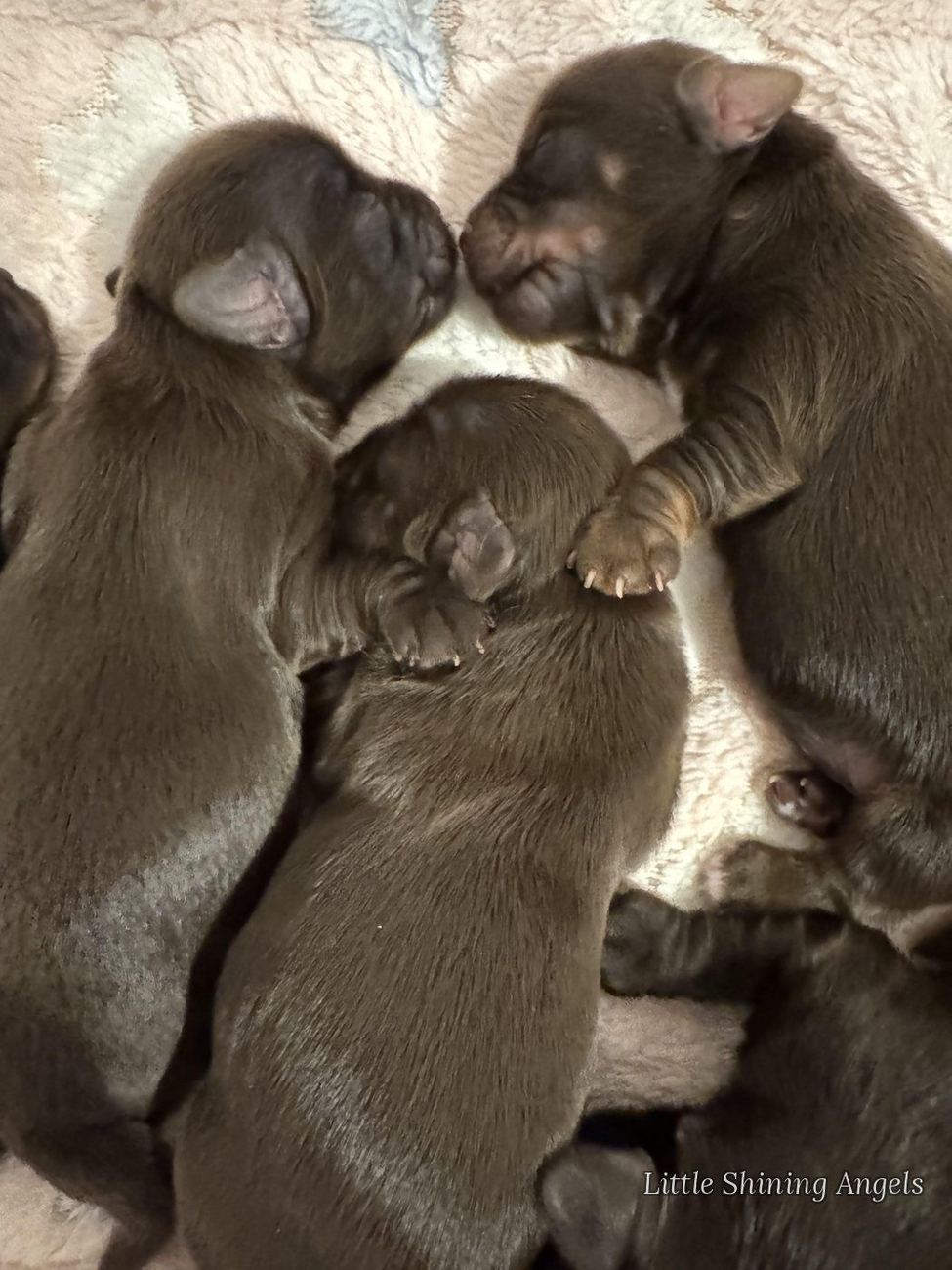
A puppy is not born a blank sheet. This is true of our Terriers and Biewer Terriers too. Through the first year of life it goes through several stages, and if we understand them, we can give it exactly what it needs in each. Let us look at this journey, step by step.
Before birth
It surprises many, but a puppy's character begins to form already in the womb. When a pregnant female is calm and content, this transfers to the puppies. When she is stressed, her body releases stress hormones that affect the puppy's development and can make a more sensitive, more timid dog. So the calm of a pregnant female is the first and one of the most important gifts a good litter receives.
The first week or two: a time of warmth
Newborn puppies cannot yet see or hear. Their world is warmth, milk and mother. Even so, a great deal is already happening. Gentle daily handling accustoms them to human touch and helps build the resilience they will need later. That is why we gently handle our puppies from the very first day.
Third to fifth week: awakening
Around the third week, puppies' eyes and ears open. Suddenly they begin to see and hear the world. They start to play with their brothers and sisters, and in that very play they learn their first important lessons: how hard they may bite, how to communicate with fellow dogs, where the limits are. The presence of a calm mother is priceless at this time.
Fourth to twelfth week: the golden window
This is the most important period in a puppy's whole life. Its mind is then most open, and curiosity is stronger than fear. In these weeks a puppy learns that the world is a safe place. Everything it encounters then in a calm and pleasant way, it accepts as perfectly ordinary. So we gently accustom puppies to everyday sounds, different surfaces and friendly visits. Always slowly and never by force.
Arrival in a new home, around the eighth week
Moving to a new home is a big change for a puppy. It suddenly loses its mother, brothers and sisters, and the only environment it knows. We help it best by quickly establishing a calm routine. When the day goes predictably, the puppy feels safe. Let the first week be for settling and trust, not learning tricks.
Three to six months: the little explorer
The puppy becomes more independent and curious, and at the same time begins to test limits. Short fear periods may also appear during this time, when a dog suddenly becomes afraid of something that did not bother it before. This is normal. It then needs calm support, not excessive pity and not scolding.
Six to twelve months: the teenage years
As a dog grows up, a period similar to human adolescence arrives. Hormones change, the dog may be more stubborn and seem to have forgotten what it learned. This is only a phase. If we stay calm, consistent and kind, the dog grows out of it and becomes a balanced adult.
Through all these stages, the same guiding principle applies. Calm, predictability and kindness. A puppy that grows up in such an environment grows into a confident, happy dog.
References and sources
Scott JP, Fuller JL (1965). Genetics and the Social Behavior of the Dog. University of Chicago Press.
Merck/MSD Veterinary Manual: Management of the Neonate in Small Animals.
Hawthorne AJ, Booles D, Nugent PA, Gettinby G, Wilkinson J (2004). Body-weight changes during growth in puppies of different breeds. Journal of Nutrition 134(8):2027S–2030S.